A straight take on brushed vs brushless RC motors: real speed, cost, and upkeep differences, when brushed still wins, and how to pick a combo.
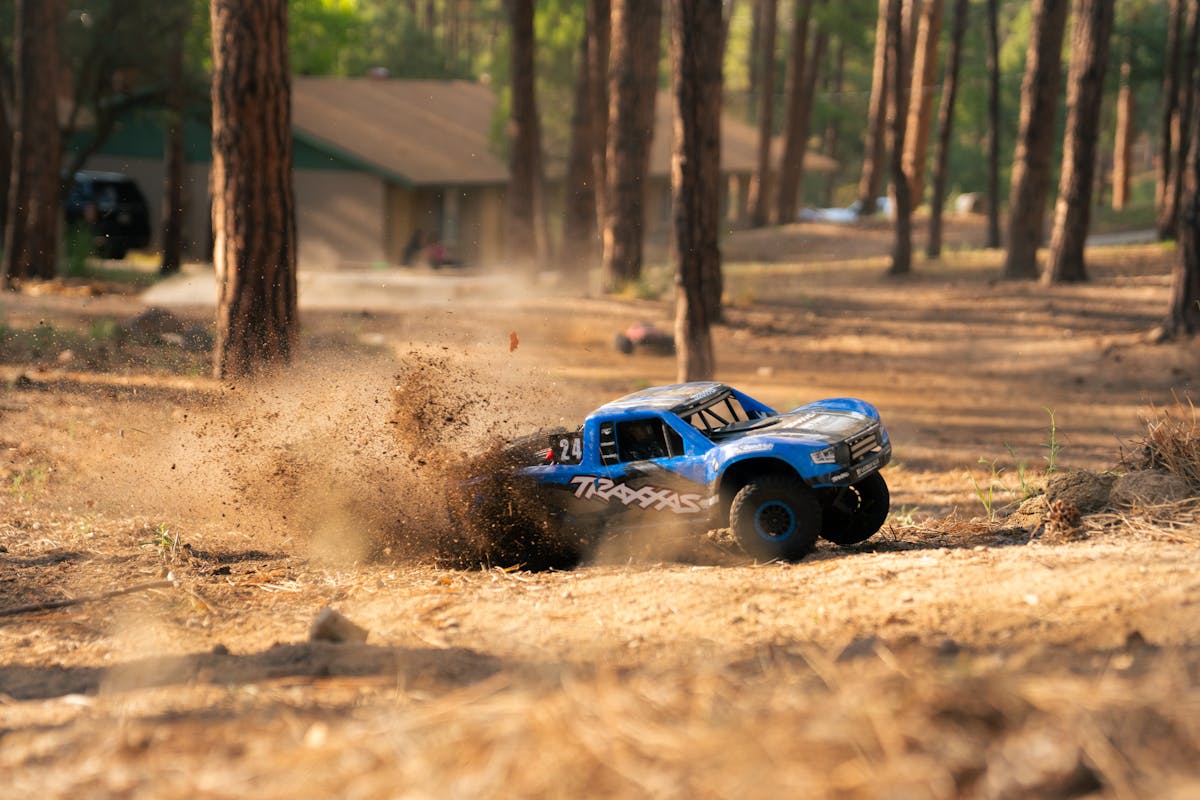
Every few weeks someone asks me whether brushless is worth it, or whether their brushed motor is fine. It depends on what you're driving and what you want out of it, which is a useless answer on its own, so here's the longer version.
I've run both for years. Beat-up brushed rock crawlers, silly-fast brushless buggies, and a couple of trucks that outran their own suspension because I got greedy.
A brushed motor has carbon brushes pressing against a spinning copper commutator. That physical contact switches the current as the motor turns, and it's also what wears out. The brushes grind down, the commutator gets dirty, and eventually the motor loses punch and runs hot. Simple, cheap, and it works.
Brushless gets rid of the brushes. The ESC does the switching electronically, energizing the coils in sequence to spin the rotor. No contact means almost nothing wears out, much less heat, and a lot more efficiency. The efficiency is the real story, not just top speed. More of your battery turns into forward motion instead of heat and friction.
Speed first, since that's what everyone asks. A decent brushless system will roughly double the speed of a comparable brushed setup, sometimes more. A stock brushed truck might hit 15-20 mph, and a mid-range brushless combo puts you at 35-40 with the fast ones going well beyond that. It isn't subtle.
Maintenance is where brushless quietly wins the long game. Brushed motors need the brushes checked and swapped and the comm cleaned, and they fade over time regardless. It isn't hard work, but it is work. A sealed brushless can motor you basically ignore. Blow the dirt off, keep the bearings happy. I've got brushless motors that are years old and still run like new.
Runtime helps too. Because brushless wastes less energy as heat, you get more minutes per pack at the same driving. It's not a huge margin but it adds up over a bash day.
This is where I talk people out of upgrading more often than you'd expect.
A replacement brushed motor is $15 to $30. A brushless motor-and-ESC combo starts around $70 to $90 for something like a Hobbywing QuicRun pairing and climbs past $200 once you're into Castle Creations or high-end Hobbywing Max gear. The entry ticket is real. On the other hand you're not buying brushes forever, and a good brushless system will outlast three or four brushed motors, so over a couple of seasons the gap closes.
If you're on a budget and just getting started, the cheap combo is genuinely fine. Hobbywing makes the best value in the hobby right now and it isn't close. Buy the QuicRun and drive it.
I'm not anti-brushed. There are spots where I'd pick it on purpose.
Rock crawling is the big one. Crawlers live at crawling speed, and a lot of drivers prefer the smooth, predictable low end of a good brushed motor (a 20T or 35T in a 540 can) over the cogging feel of cheap sensorless brushless. Axial's smaller rigs ship brushed for a reason and plenty of serious crawler people never change it.
Kids' trucks, hand-me-down bashers, anything you expect to get destroyed: brushed. When the motor is a $20 part and the whole truck might end up in a creek, you don't want a $150 combo in there. And if you've got an old brushed vehicle running fine, there's no law saying you have to upgrade.
Say you've decided on brushless. Here's the alphabet soup, cut down.
Kv rating. That number, like 3300kv or 2200kv, is rpm per volt with no load. Higher kv means more rpm, more speed, more heat, less torque. Lower kv means more torque and cooler running. For a 1/10 basher, 3000-3500kv on 2S or 3S is a sane starting point. For a 1/8 or a big 4S-plus rig you drop to 1800-2200kv because the higher voltage makes up for it. Chasing the biggest kv number is how people cook motors.
Sensored vs sensorless. Sensored motors have a wire that tells the ESC exactly where the rotor is, which gives smooth low-speed control and no cogging. That's great for racing and crawling. Sensorless is simpler and cheaper and totally fine for bashing, where you're rarely creeping along. For a first brushless basher, sensorless is the honest pick.
Buy the combo, not the pieces. A matched motor-and-ESC set from one brand is programmed to play nice together. The names worth your money are Hobbywing (QuicRun for value, Max and Xerun for serious power), Castle Creations (bomb-proof, great software, my favorite when the budget allows), and Spektrum Firma if you're in the Traxxas/Spektrum ecosystem and want plug-and-play. You won't get burned by any of the three.
Here's the mistake I made. I dropped a hot brushless combo into a stock chassis and immediately started breaking things. Stripped diffs, a snapped dogbone, a bent hinge pin. The motor was great. The rest of the truck couldn't handle what the motor was now asking of it.
Speed multiplies stress everywhere, through the drivetrain, the suspension, the plastic. If you're going from a mild brushed setup to a big brushless jump, budget for supporting parts too. Metal diff gears, better dogbones or CVDs, maybe stiffer shocks. Otherwise the motor upgrade just relocates the weak link and you spend your first month fixing breakage instead of driving.
The saner move for most people is a modest combo that's maybe 40% faster instead of 200% faster. Your chassis survives, your wallet survives, and you still feel the difference every run.
If you're shopping, plenty of people list clean used brushless combos on the marketplace for well under new-combo money, and the deals page is worth a look before you pay retail. The brands directory is a decent starting point for seeing which motors people run in a given chassis. And before you finalize anything, read up on how gearing changes the equation, because the right motor with the wrong pinion still runs hot and slow, and that's a four-dollar fix.