NiMH or LiPo for your first RC car? A practical breakdown of punch, weight, runtime, C ratings, connectors, and which charger to actually buy.
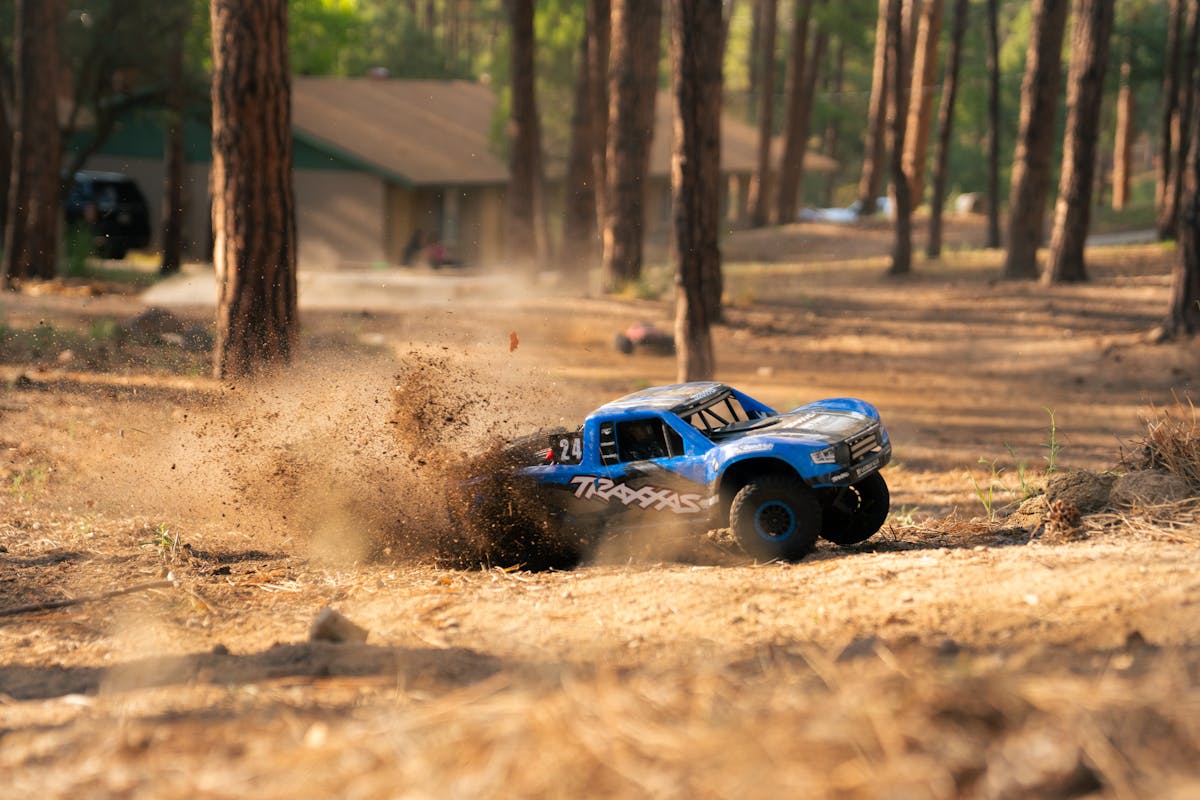
You just got your first RC car, or you're about to, and now there's a battery question staring at you. NiMH or LiPo? The forums make it sound like a religious war and it really isn't. Both work. One is more forgiving and one is more fun, and which you start on mostly depends on how much patience you have on day one.
I've run both for years across bashers and race cars. Here's how I'd decide.
NiMH (nickel-metal hydride) is the old reliable, and it's still the pack a lot of ready-to-run kits ship with. You can abuse it and it mostly shrugs. Run it flat, fine. Leave it on the shelf half-charged for a month, fine. Charge it on the dead-simple wall charger that came in the box, also fine.
The tradeoffs are real though. NiMH is heavy and it sags, so as the pack drains your car gets noticeably slower before it quits. The punch just isn't there the way it is with LiPo. A typical 6-cell (7.2V) stick pack in the 3000-5000mAh range weighs a good chunk more than the LiPo that would replace it, and you feel that weight in a small buggy.
For a first pack, though, NiMH is still defensible, especially if the car is going to a kid or you just want to drive without thinking about battery chemistry. Nobody has ever burned down a garage with a NiMH pack. Start here, learn the car, and graduate to LiPo when the slower-as-it-drains thing starts to annoy you. It will.
LiPo (lithium polymer) is where almost everyone ends up, for three reasons.
First, punch. A LiPo holds its voltage much flatter through the run, so the car feels strong from the first trigger pull to the last. Second, weight. A 2S LiPo of the same capacity is a lot lighter than the NiMH it replaces, and shedding that weight wakes up both the acceleration and the steering. Third, runtime. LiPo packs the energy denser, so you can carry more capacity for the same weight and drive longer between charges.
The catch is that LiPo demands respect. You can't run it dead. Take a LiPo below about 3.0V per cell and you'll damage it, sometimes permanently and sometimes dangerously. You need a low-voltage cutoff, which most modern brushless ESCs from Hobbywing, Castle or Spektrum have built in, so turn it on. You need a proper balance charger. And you need to store it right, which trips up more beginners than anything else.
None of this is hard once it's habit, but it is a habit you have to build, which is the whole reason NiMH still exists as a starter option. The full routine is written out in how to care for LiPo batteries.
Two numbers on every pack, and the marketing has muddied both.
Capacity is the milliamp-hours. Bigger number, longer runtime, more weight. A 5000mAh pack runs roughly twice as long as a 2500mAh one, all else equal. For a 1/10 basher, 5000mAh 2S is the sweet spot: plenty of drive time without turning the car into a brick.
C rating is supposed to tell you how hard the pack can discharge, so a 5000mAh pack rated 50C can theoretically dump 250 amps. Those numbers are wildly optimistic on cheap packs and mostly meaningless as a spec to shop by. A "100C" bargain pack and a "50C" pack from a reputable name will often deliver similar real current, and the reputable one will do it for more cycles. Anything 40C or up from a brand people trust is fine for a normal 1/10 setup. I'd rather have a true 45C pack than a fantasy 120C.
The label that matters more than either is cell count. 2S means two cells, 7.4V nominal. 3S is 11.1V. More cells is more voltage is more speed, but only if your ESC and motor are rated for it. Running 3S into a system built for 2S cooks things, so check the rating before you go up.
This one catches everybody. There's no universal RC battery connector, and your new pack might not plug into your car out of the box. The common ones:
If you're starting fresh and get to choose, standardize on XT60. It's everywhere now, adapters to anything else are a couple of bucks, and you'll thank yourself when your third battery plugs into everything you own. If your car came with Traxxas or EC3 you don't have to re-solder the world, just buy an adapter pigtail. Matching connectors across your fleet is a small quality-of-life win that pays off constantly.
Don't cheap out here. The charger is what keeps your expensive packs alive and your garage un-lit, and a good one isn't expensive.
Skip the wall-wart that came in the box the moment you touch LiPo, since most of those only handle NiMH and don't balance. What you want is a balance charger that does both chemistries. The reliable beginner picks have been the ISDT and SkyRC-class chargers, or the endlessly cloned B6-style unit. Something in the $30 to $60 range that:
Charge at 1C to start, so a 5000mAh pack at 5 amps. You can go faster later once you understand the tradeoff, but 1C is kind to the pack and there's no rush. And always charge LiPo somewhere a fire can't spread. A cheap fireproof charging bag or an old ceramic pot on concrete is fine, and cheaper than a garage. Battery choice affects the motor conversation too, which I sketched out in brushed vs brushless motors.
If you want zero fuss and the car's going to get handed around: one or two NiMH packs and the wall charger. Drive, have fun, upgrade later.
If you want the real experience and you're willing to build one small habit: a good dual-chemistry balance charger, a pair of 2S LiPos in a sane capacity (5000mAh for 1/10), all on XT60, and the discipline to storage-charge them. That's what I run and what I recommend to most people.
Either way, don't overbuy on day one. Get the car dialed, figure out how much you're actually driving, then match packs to that. When you're ready for a second battery, the current RC deals are the cheapest place to find one, since batteries go on sale constantly. And if you're buying a used car to begin with, plenty of the rigs listed here come with a pack or two already sorted.