Ready-to-run or build a kit? The hidden electronics shopping list, real cost with numbers, who should go kit first, and the used-roller middle ground.
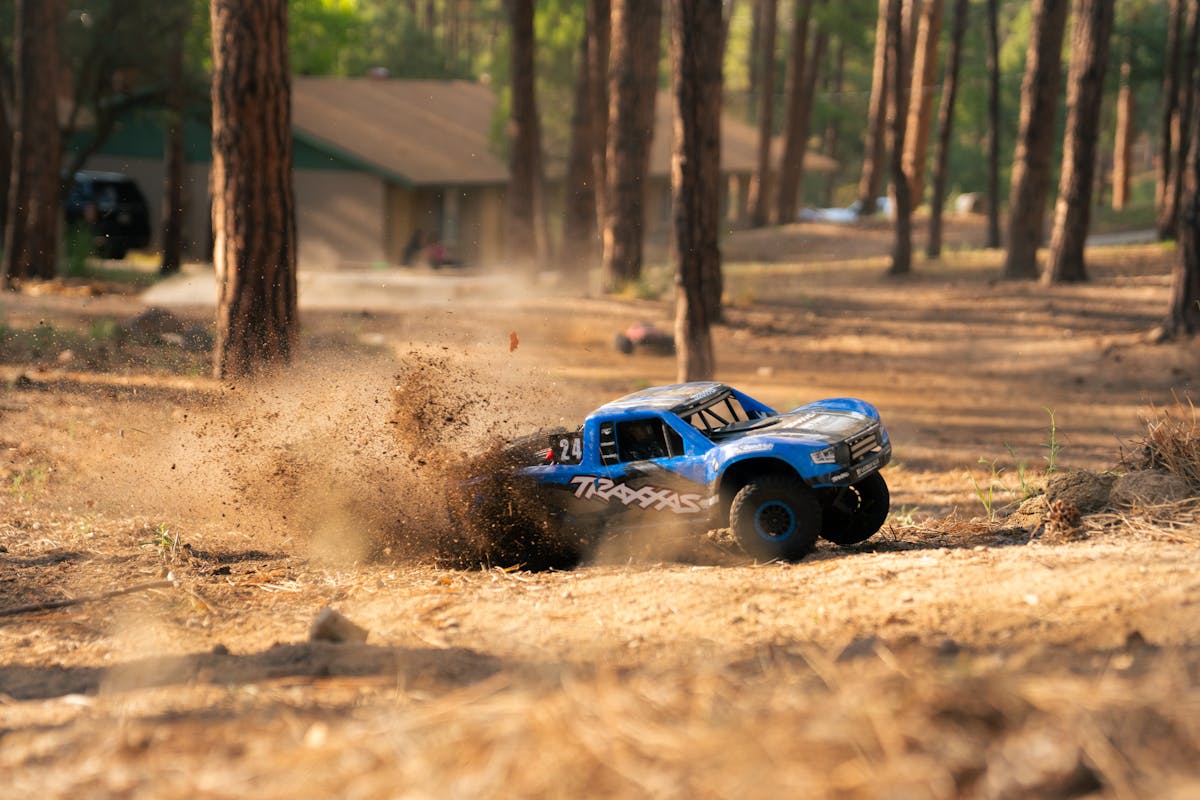
Every few weeks somebody asks me whether they should buy an RTR or build a kit. The honest answer is that it depends on what you want out of the hobby, which isn't much help, so here's the real breakdown: what each one costs, what corners get cut, and who should build versus who should just drive.
RTR means ready-to-run. Open the box, charge a battery, go. A kit is a bag of parts and a manual, and you supply the brains and the muscle. On paper they end up as the same rolling car. In practice they're very different purchases.
An RTR comes assembled with a motor, ESC, servo and receiver already installed, and you usually get a transmitter in the box too. On a Traxxas Slash or an Arrma Granite you're one battery and charger away from bashing. That convenience is real and I'm not going to sneer at it, I've bought plenty of RTRs and had a blast with them.
What nobody tells you is where the corners get shaved to hit that price and still assemble it in a factory. The electronics are the manufacturer's house-brand tier, not the good stuff you'd pick yourself. The tires are glued but often on cheap foams. Shocks come pre-filled with whatever oil the assembly line used, and it's rarely the weight you'd want. Screws are sometimes cross-threaded because a robot ran them in.
None of that makes the car bad. It makes it a starting point you'll quietly upgrade over the next year, which is where the cheap RTR stops being cheap. The flip side is that an RTR gets you driving today, and if you're not sure you'll stick with the hobby at all, that matters a lot.
A kit is a class. You'll learn where every diff, shim and ball stud lives because you put them there. When something breaks at the track, and it will, you already know how it comes apart. A kit builder can field-repair a car in the pits while the RTR owner is googling exploded diagrams on their phone.
But a kit box is not a complete car, and this catches first-timers every time. The kit is the chassis, arms, drivetrain and body. You supply everything electric. Here's the list that turns a "$280 kit" into a $550 project:
I'm not listing that to scare anyone off. I'm listing it because the sticker price of a kit is a lie of omission, and I've watched people buy the kit, get it home, and realize they can't run it for another two paychecks.
Say you want a 1/10 short-course truck. A solid RTR, a Slash or a Losi or whatever, runs $250 to $350, and once you add a battery and charger you're at $330 to $450 all in.
The kit version is a TLR or Team Associated kit at $280 to $330, plus the electronics above, so $500 to $650 for the same class of car. The kit costs more up front, which surprises people who assume "assemble it yourself" means cheaper.
Where the kit wins is ceiling and longevity. You chose every component, so nothing's a compromise, and when you crash you replace a $6 arm instead of eating a hidden failure in a molded-in electronics tray. Over three years the kit car often costs less because you're not re-buying the whole platform to escape its weak points.
Go kit if you already know you're in this for the long haul, if you like the wrenching as much as the driving, or if you're aiming at organized racing where you'll be tuning constantly anyway. Racers build kits because a kit is a tuning platform. You're going to be swapping oils and gearing every weekend, so starting from a car you fully understand is a head start. Browse what people run in the setup sheets before you buy, so you pick a chassis with a healthy parts and knowledge base behind it.
Stay RTR if you're brand new, if your budget is tight this month, or if "I just want to rip around the park" describes you honestly. No shame in it, half my shelf is RTR. If you're still deciding what class fits you, choosing your first RC car pairs with this one.
You don't have to pick a pole. A roller is a kit that's built but has no electronics, so someone assembled the chassis and is selling it bare. You get the build quality and the part knowledge without the bag-of-screws marathon, and you install your own good electronics. Rollers show up used all the time.
Then there's the used pre-built race chassis. Someone's last-season TLR or Xray, tuned and sorted, often with quality electronics already in it, sold for a fraction of new because the racer upgraded. This is my favorite way into a serious car. You skip the assembly and the electronics shopping list and you get something that already handles. Just check for cracked chassis plates and worn diffs before you buy. Plenty of these move through the used listings, and it's worth watching for a week or two rather than grabbing the first one.
Whichever way you lean, go look at real cars people are running. Poke through a few member garages and you'll see what the RTR-then-upgrade path and the kit-from-scratch path actually turn into over time. That'll tell you more than any spec sheet.