What RC car scale actually means, plus a plain-English run through 1/24, 1/18, 1/16, 1/10, 1/8 and 1/5 on cost, space, parts and which to buy.
Somebody new asks me this every week, usually some version of "what's the difference between a 1/10 and a 1/8, and which one do I want?" Fair question. Scale is the first spec you see on every box and it sounds precise, like it means something exact. It sort of does and it sort of doesn't.
Here's how RC scales actually work, what each one costs and needs from you, and how to pick without overthinking it.
Scale is a ratio comparing the model to a real vehicle. A 1/10 car is theoretically one-tenth the size of the full-size thing it's based on. 1/8 is one-eighth, so bigger. Smaller number on the bottom, bigger model.
The catch is that there's no real full-size car behind most of these. A 1/10 stadium truck isn't a shrunk-down anything that exists on the road. Manufacturers pick a scale, design a chassis that races well at that size, and put a body on it. So the number describes a size class more than a strict measurement, and two "1/10" buggies from different brands can differ by an inch of wheelbase without anyone blinking.
Treat scale as a bucket. It tells you roughly how big, how heavy, how much it costs to feed, and where it fits. It isn't a ruler.
Palm to shoebox sized. 1/24 is tiny, like the Axial SCX24 crawler. 1/18 is a step up, like the Losi Mini-T. Both are great for apartments, hallways, backyards, and running indoors in winter, and they're cheap to buy at $100 to $250 ready-to-run and cheap to fix.
The downside is parts and durability. The little guys use small, sometimes proprietary bits, and a hard hit into a curb can crack something you'll wait a week to replace. The SCX24 is the exception, with a huge community and parts everywhere, and it's the most fun-per-dollar crawler I've handed to a beginner. If space is your real constraint, start here and don't feel like you're settling.
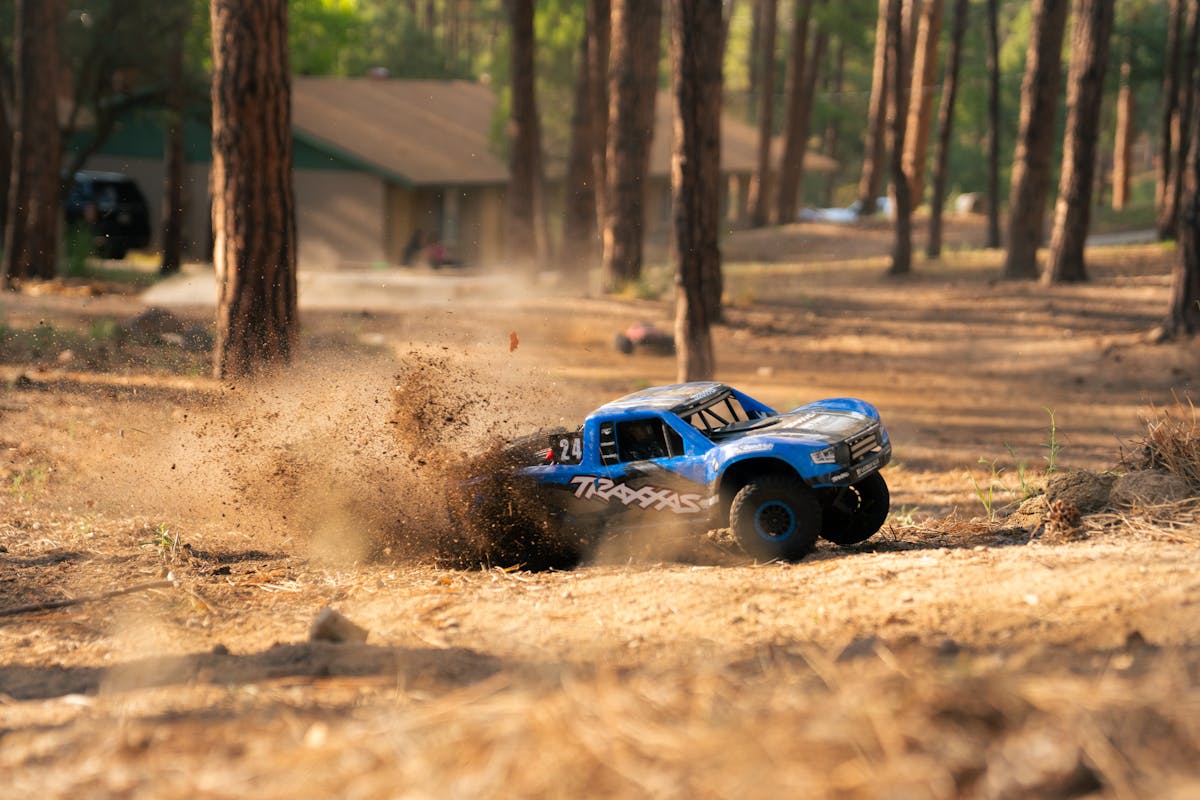
Traxxas basically owns this size with the 1/16 Slash, E-Revo and Summit. They're scaled-down versions of their big trucks, sharing a lot of the same design, and fast enough to be a real toy for a grown adult without needing a parking lot. Parts support is good because it's Traxxas. If you want something that feels like a proper bash truck but you've only got a driveway and a small park, this is a smart pick people overlook.
If you only remember one thing: 1/10 is the default. It's the biggest, deepest, most-supported scale in RC. Roughly 15 to 18 inches long depending on the class. Buggies, stadium trucks, short course trucks, touring cars, drift cars, rock crawlers, most of them live at 1/10.
Parts availability is unbeatable. Every brand you've heard of makes 1/10 stuff, from Traxxas and Arrma to Team Associated, Losi, TLR, Tekno, Xray, Schumacher, and Axial for crawlers. Tires from ProLine and JConcepts, electronics from Hobbywing, Castle and Spektrum. If a part exists in RC, it probably exists for a 1/10. Ready-to-run trucks like the Arrma Granite or Traxxas Slash sit around $250 to $400, and a race-level kit plus electronics runs more.
Cost to run is reasonable too. A 2S or 3S LiPo, a standard-size servo, nothing exotic. This is where I tell almost everybody to start, and it's where the used market is deepest. You'll find far more 1/10 cars and trucks for sale than any other size, which matters when you break something and want a cheap donor.
1/8 is a real step up in size, speed and money. These are 18 to 20-plus inches, heavy, and they hit hard. 1/8 buggy and truggy are the top tier of off-road racing, and 1/8 6S bashers like the Arrma Kraton and Outcast are absurdly fast, 60 mph out of the box on the hot ones and more if you gear up.
Everything costs more at this size. Bigger 4S and 6S LiPos, beefier servos, tires that wear out and cost $40-plus a set, and when you crater one at 50 mph you break bigger, more expensive parts. It's a great scale, it's just not where I'd start unless you already know you want speed and have the budget and the open space for it. You need a real field or track, not a cul-de-sac.
1/5 is niche and often gas or nitro powered. HPI Baja, Losi DBXL, machines the size of a large dog that you need a truck to haul. Loud, thirsty, expensive, and a blast if that's your thing. Not a beginner scale, and if you're asking this question it isn't your first car.
If you want to race, check what your local track actually runs before you buy. A car in the wrong class just sits in the pits. You can look up nearby tracks and hobby shops on the places directory and match your purchase to their program.
The thing beginners get backwards is picking a scale for looks or speed and then discovering they have nowhere to run it. Start from your space instead.
Apartment or small yard, go 1/24 or 1/18, or a 1/16 truck. A real backyard or a park nearby, 1/10 does everything. A field, a vacant lot, or a track membership, now 1/8 makes sense. Space first, then scale, then the specific model.
For most people asking, the answer is a 1/10. It's the size with the most cars, the most parts, the deepest used market, the most people at the track to help you, and the widest range from crawler to racer. You will not run out of room to grow in 1/10. Go smaller only if space forces it, and go bigger only if you specifically want speed and have somewhere to use it.
Once you've settled on a scale, the next fork is the type of car within it, buggy versus truck versus crawler versus touring. That's a whole decision of its own and I covered it in the guide on RC car classes. If you're still right at the start, how to choose your first RC car covers the ready-to-run versus kit question and what electronics you actually need.