The stock steering servo is your RTR's first weak point. How to pick torque vs speed, size, metal gears, voltage, and brand for crawling, racing, or bashing.
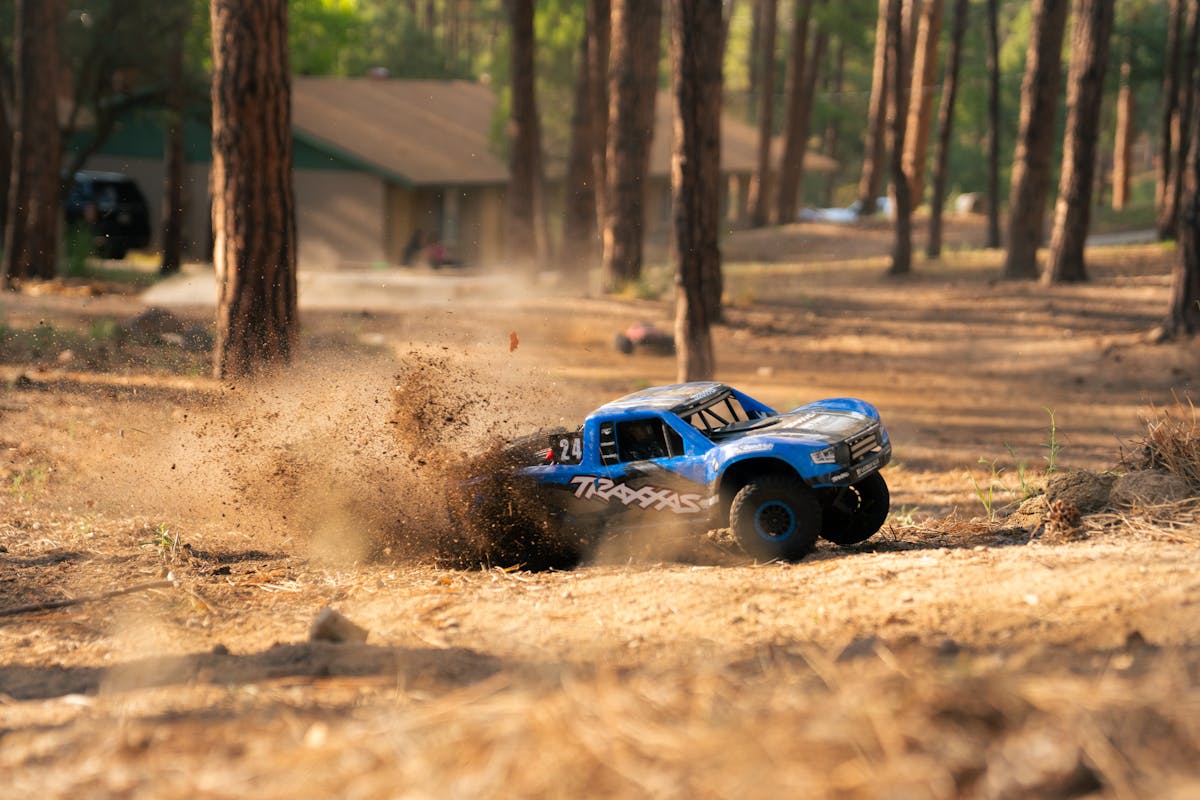
The servo is the little motor that turns your wheels left and right. Simple job, right up until the one that came in your ready-to-run kit strips a gear on a curb and your truck drives itself into a fence at full throttle.
Nobody tells you this when you buy your first RTR, but the steering servo is almost always the first real weak point in the rig. The transmitter's fine, the ESC is usually fine, the motor will outlast you. The stock servo is where they saved four dollars, and you'll feel it the first hard weekend.
Two specs matter and they fight each other. Torque is listed in kg-cm, meaning how hard it can push at the end of a 1cm arm. Speed is listed in seconds per 60 degrees, so a smaller number is faster and a servo rated 0.10s is quicker than one rated 0.13s.
You almost never get both maxed out in the same servo at the same price, so pick one to favor based on what you drive:
Being in the right neighborhood matters much more than chasing the last kg-cm.
There are three common ones. Standard is the default and fits most 1/10 and 1/8 stuff. Low-profile is the same footprint but shorter, made for on-road touring cars where the chassis is thin and a tall servo won't clear the body. Micro and mini servos are for small scale like 1/18 and 1/24, or tight crawler builds where a standard case physically won't go in.
Buy the size your car's servo mount is built for. Cramming a low-profile into a standard bay to save 8mm you don't need is spending extra for nothing, so check what came out before you buy what goes in.
Two things separate a real servo from a throwaway. The first is metal gears. Plastic gear trains are the classic RTR failure, where one good hit shears a tooth and your steering turns to mush. Any servo worth upgrading to has a full metal gear set.
The second is motor type. Cheap servos use a cored brushed motor. Better ones use coreless, which responds faster and holds center tighter. The top tier uses brushless servos, which are quicker, cooler-running, and take abuse a coreless won't. Brushless is where the money goes on a serious crawler or race car and you can genuinely feel it.
If you're grabbing your first upgrade, the honest floor is coreless with metal gears. That's the point where the servo stops being the problem.
This is where people cook a servo on day one. Servos are rated for a voltage range, and a lot of the good ones now are HV, or high voltage, meaning they're happy running straight off a 2S LiPo at 7.4-8.4V. A non-HV servo fed HV power will run hot and die early, sometimes fast.
The power comes through your ESC's BEC, the little voltage regulator built into the speed control. Check two things: that the BEC's output voltage matches what your servo wants, and that the BEC can supply enough current. A hungry high-torque servo pulls real amps under load, and a weak BEC will brown out. You'll see that as the receiver randomly resetting mid-run, which feels like a radio problem but isn't. An external BEC, and Castle makes a good standalone one, solves it.
If you run in wet grass, snow, mud, or anywhere near a puddle, get a servo that says waterproof on the box rather than water resistant. Water in the gears means corrosion and grit, and a servo is a pain to dig out and replace. It's part of the same conversation as sealing the rest of your electronics, which I get into in the waterproofing guide.
A basher or a new crawler is well served by a mid Savox or ProTek and I'd stop there. Save the Reefs money for when you know you need it. If you're on a budget, a Power HD or AGFRC will still embarrass the servo you're replacing.
The servo talks to your receiver, so if the BEC and channel stuff above felt fuzzy, transmitter and receiver basics fills in that side of it.
Servos are one of the easier parts to buy used, since a good metal-gear coreless unit either works or it doesn't. There's not much to wear out invisibly the way there is with a motor. Sellers often list a servo alongside a whole roller or a parts lot, so it's worth checking the marketplace listings before you pay full retail, and the deals page catches retailer price drops when a good one goes on sale.
Whatever you land on, match it to how you actually drive instead of to the biggest number. Torque for crawling, speed for racing, both-ish for bashing, and never feed an HV servo the wrong voltage.